Case study / Private commercial SaaS
ShopSpark turns product photos into seller-reviewed Etsy drafts.
I designed and built the product workflow, interface, application architecture, cloud infrastructure, AI orchestration, and deployment system. The repository stays private; the decisions and results are worth sharing.
The product
Less listing busywork. More selling.
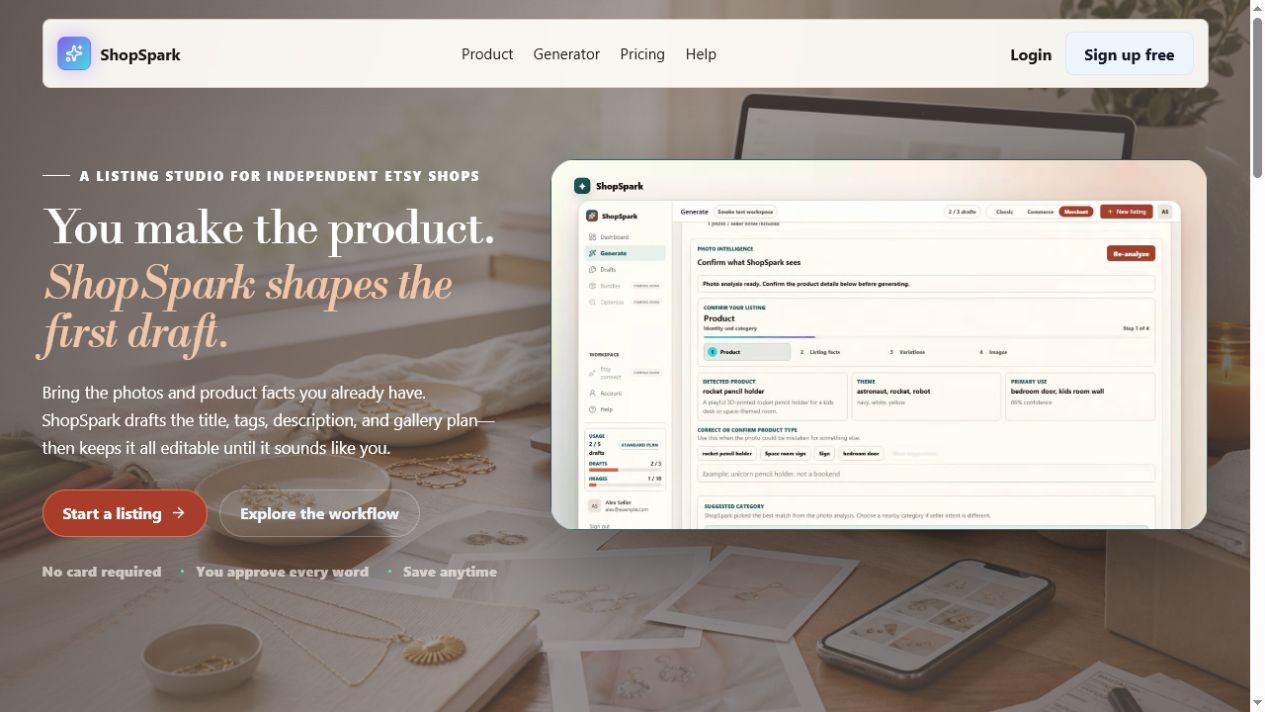
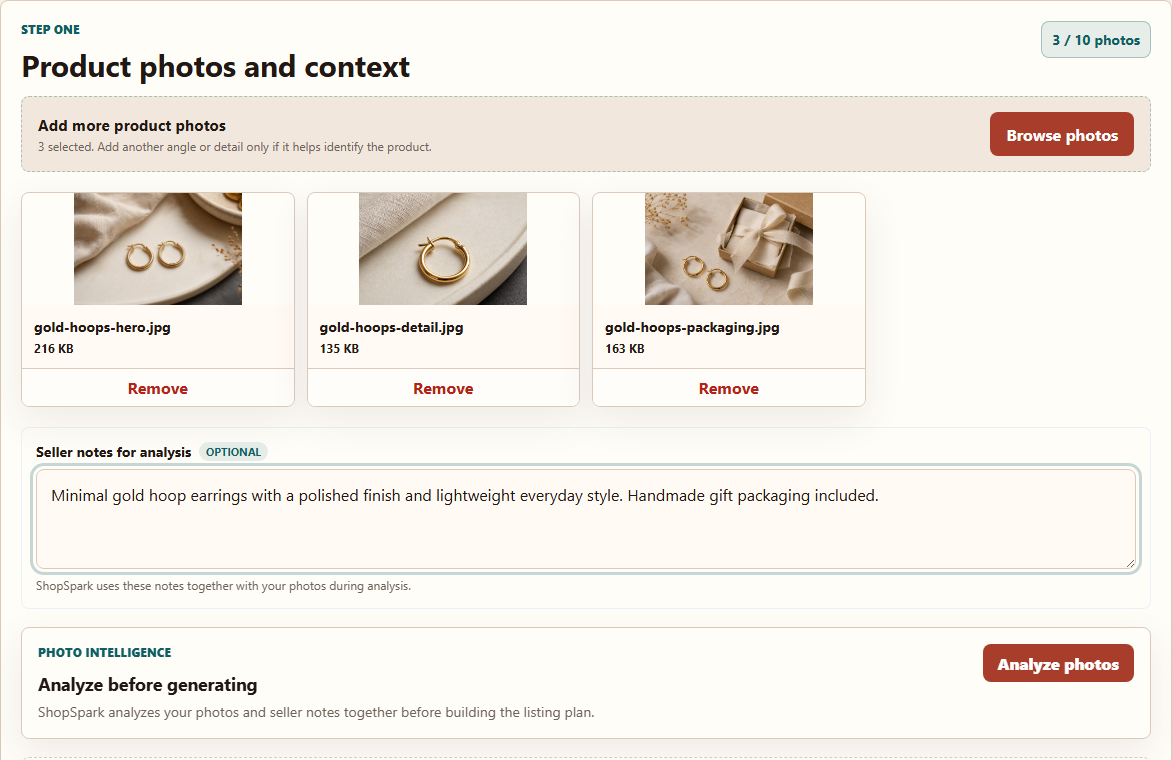
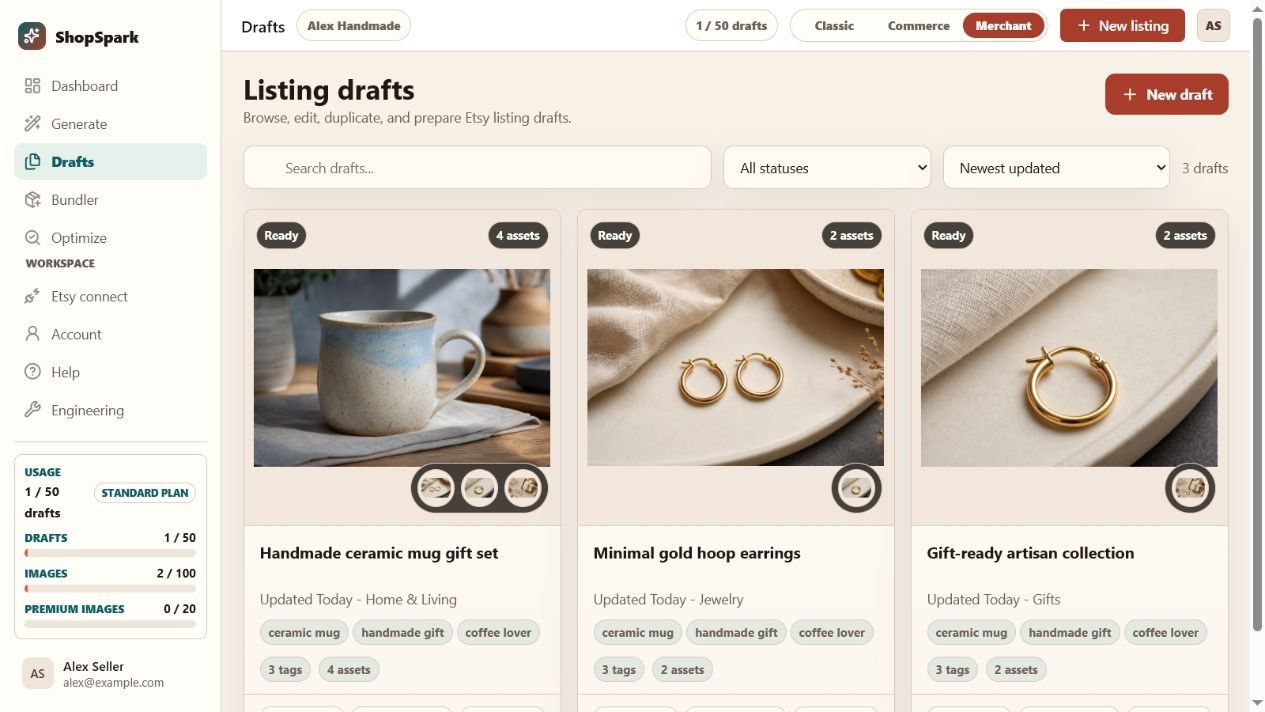
ShopSpark is an AI-assisted workspace for Etsy sellers. A seller uploads product photos, adds optional notes, and receives an editable listing draft with title, description, tags, suggested attributes, and supporting media. Sellers can also combine existing products into a bundle draft and plan a coherent image gallery.
The product is deliberately review-first. Automation prepares the work; the seller remains the decision-maker before anything reaches Etsy.
System design
Fast requests in front. Durable work behind.
Listing and media generation cross slow, expensive, and failure-prone external boundaries. The system keeps the interactive API responsive while queue-backed workers handle long-running work. Provider interfaces keep AI vendors replaceable, and feature flags plus spend controls make expensive paths explicitly opt-in.
Text generation remains useful even if optional imagery is delayed or unavailable.
Engineering decisions
Constraints became the architecture.
Local and cloud image generation
Image jobs can route between local and cloud capacity according to quality, availability, and cost. The hosted application never calls a local workstation directly; an outbound worker pulls jobs from a queue and returns results without exposing the machine to the public internet.
Draft-only marketplace automation
Automated flows create drafts rather than active listings. That product rule is also a safety boundary: marketplace automation never publishes a seller’s live inventory without review.